
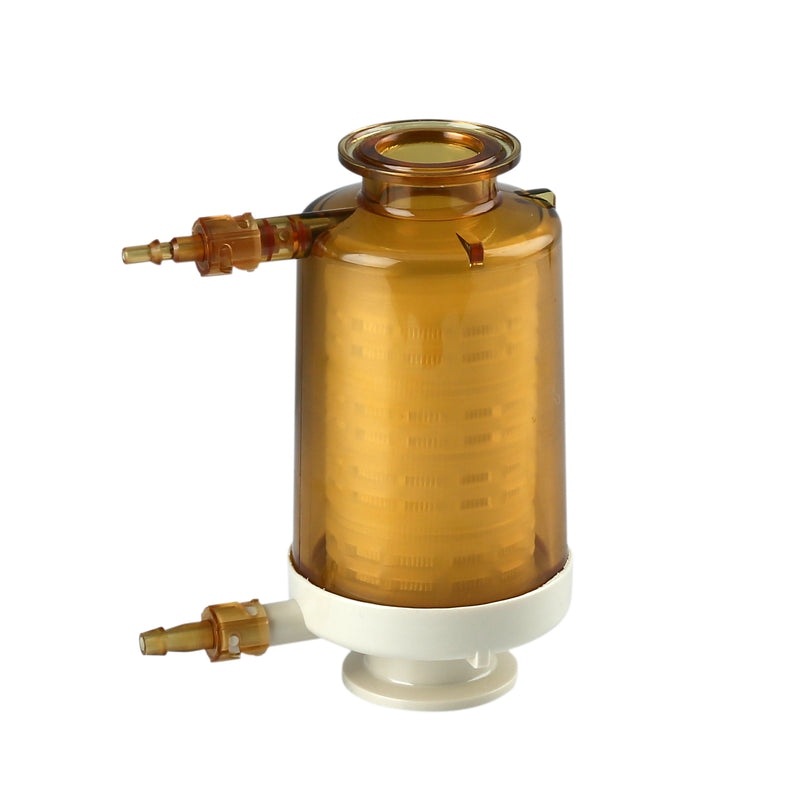
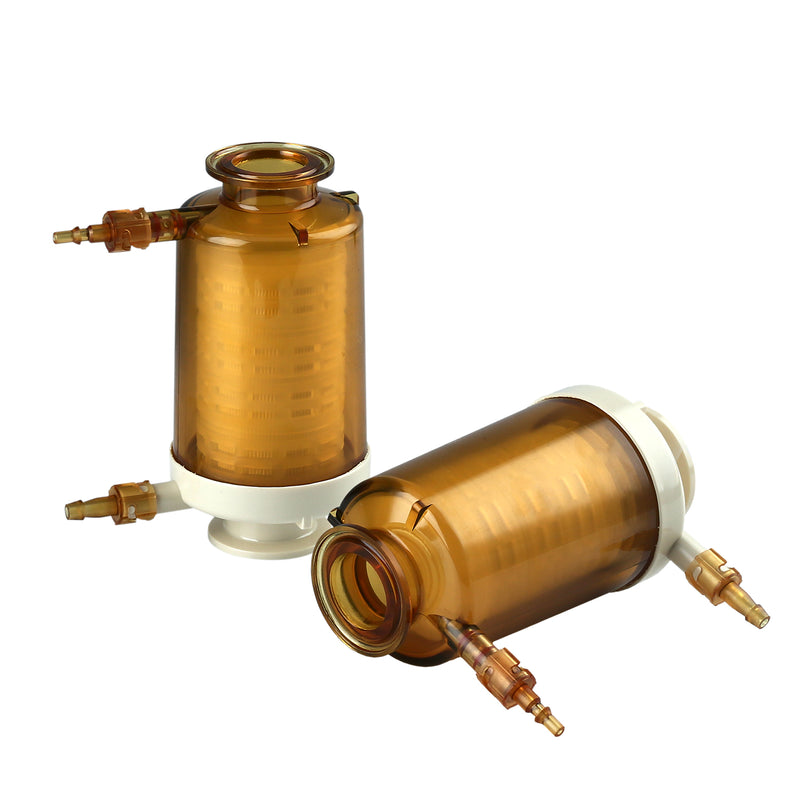
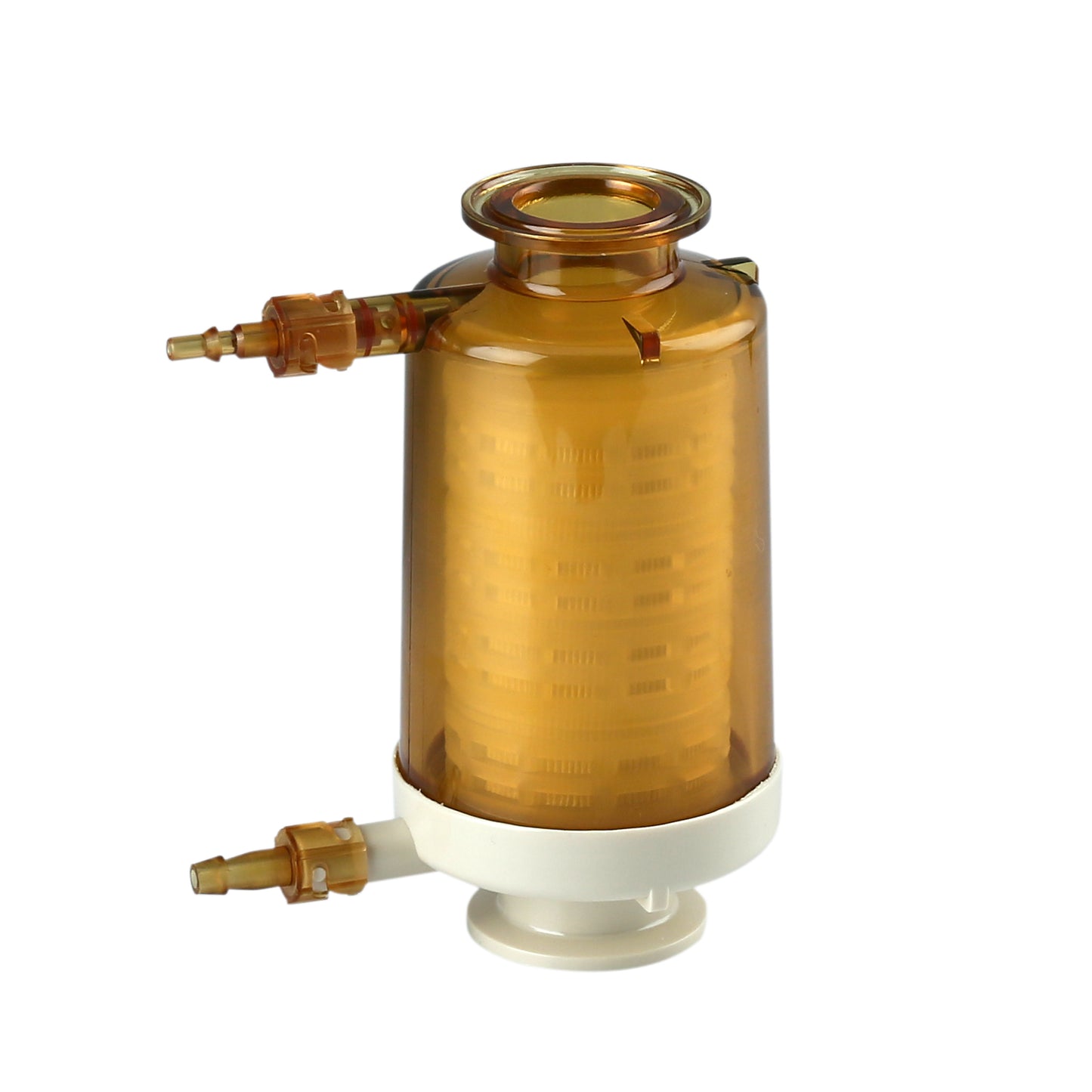
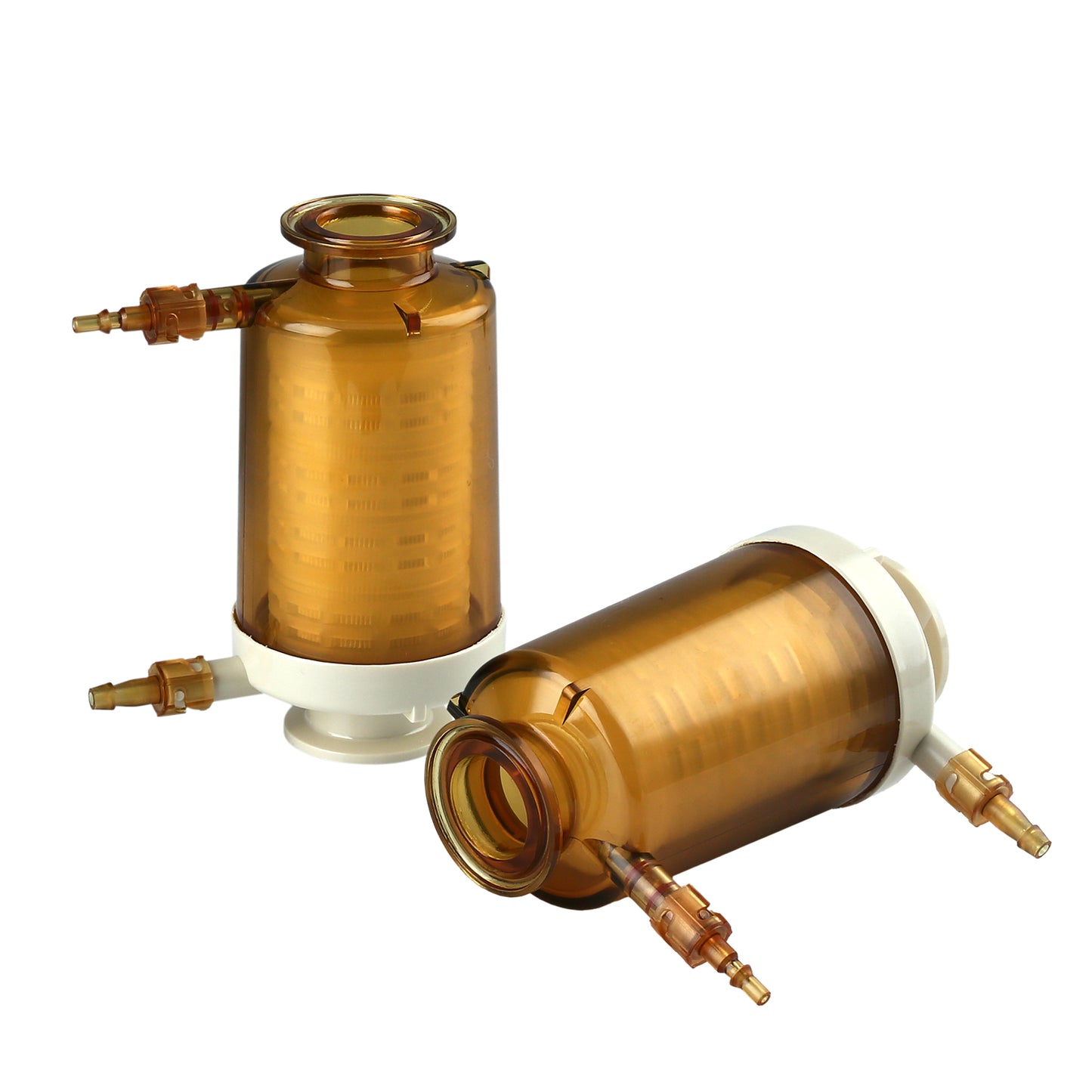
Purcise™ SLT 0.2 μm PES Sterilizing-Grade Brisip SP3 Capsule Filters Steam-In-Place (SIP), Low Cytotoxicity
*Not for medical use
Couldn't load pickup availability
Specifications
| Materials | Membrane | Hydrophilic Polyethersulfone(PES) |
| Support | Polypropylene(PP) | |
| Core/Cage/End Cap | Polypropylene(PP) | |
| Capsule Housing | Polyetherimide (PEI) | |
| Capsule Port Insert | 316L Stainless Steel | |
| End Cap O-rings | Silicone | |
| Vent O-rings | Silicone | |
| Inlet/Outlet | 38 mm (1 1/2") Sanitary Flange | |
| Filtration Area | 0.15m² |
|
| Operating Conditions | Max. Operating Temperature | 80°C |
| Max. Differential Pressure (Forward) | 0.55 MPa @25°C 0.10 MPa @80°C |
|
| Max. Differential Pressure (Reverse) | 0.21 MPa @25°C |
|
| Sterilization Option | SIP | Can be SIP 8 cycles for 60 min at 135 °C (Differential Pressure < 30 kPa). |
| Autoclavable | Can be autoclaved 10 cycles for 30 min at 131 °C | |
| Quality Standards | Integrity | 100% Integrity testing |
| Traceability | Each filter with a unique serial number | |
| QMS | ISO 9001:2015 | |
| Package | Pack Size | 1/pk |
| Packaging | Double PE bag |
Features
- Low cytotoxicity
- Low adsorption
Applications
- Culture-medium sterile filtration
Regulatory Compliance
- Effluent meets the USP<788> requirement of particulate matter in large volume injection.
- Component materials meet the criteria for a “Non-fiber-releasing filter”as defined in 21 CFR 210.3(b)(6).
- Retention of 10⁷ cfu/cm² Brevundimonas diminuta(ATCC 19146) according to ASTM F838.
- Aqueous extraction from a cartridge contains less than 0.25EU/ml as determined by Limulus Amebocyte Lysate (LAL), meeting requirements of USP<85>.
- Components meet the requirement of USP <87> In Vitro Biological Reactivity Test.
- Components meet the criteria of the USP <88> Biological Reactivity Test for Class V-121 °C plastics.
- Components meet the FDA indirect Food Additive requirements cited in 21 CFR177-182.
- Based on the current information from our suppliers, all components used in the manufacture of this product are animal-free.
*Contact us for more specification details.
- Purcise_SPS Download