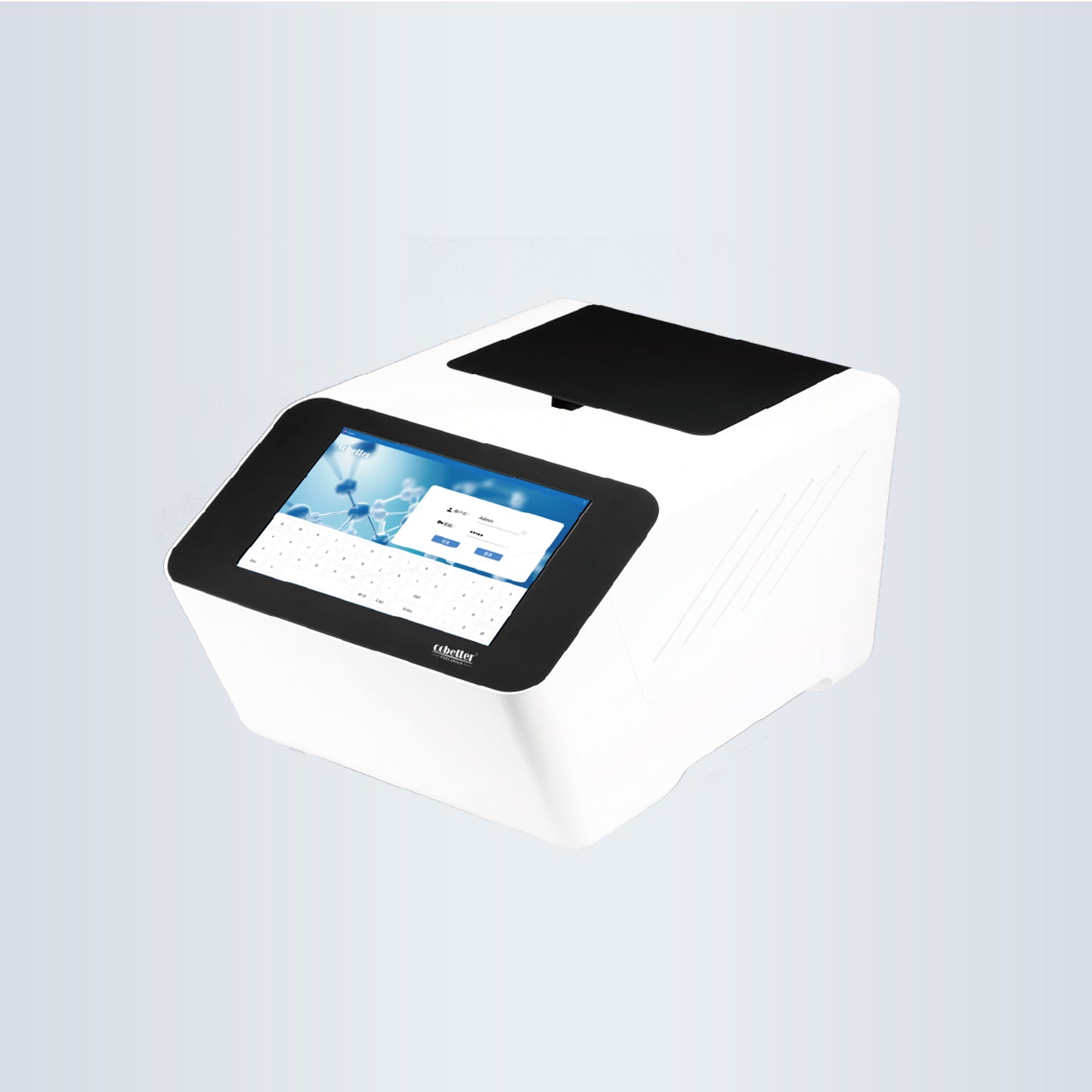
Q: When using Cobetter CTBA series bag integrity tester to perform leak testing on unused bags, does it compromise the sterile environment inside the bag?
Cobetter CTBA series bag integrity tester is not designed with an air sterilization filtration function. Therefore, when using it to conduct leak testing on unused bags, an air filter must be pre-installed on the bag being tested to ensure that the sterile environment inside the bag is not compromised. Additionally, an integrity test must also be conducted for the air filter.
Q: When using the CTBA series bag integrity tester to perform leak testing on a bag, what is the smallest leak hole (in microns) that can be detected?
The leak hole value depends on the test method provided by the bag supplier and is not significantly related to the instrument. Please consult the bag supplier for details.
Q: Can the CTBA series bag integrity tester perform leak tests on multiple bags simultaneously?
To improve testing efficiency by performing simultaneous leak tests on multiple bags, users can purchase additional Cobetter CTBA2 testing units alongside the CTBA series bag integrity tester. Each additional CTBA2 unit enables the synchronous leak testing of one extra bag. A single CTBA series integrity tester can be configured with a maximum of four CTBA2 units, allowing leak testing of up to five bags simultaneously.
Q: If the bag being tested is a large-volume 3D bag and it is in an unused, folded state, should it be pre-inflated to allow for some expansion before performing the leak test?
When using Cobetter CTBA series bag integrity tester to perform leak testing on a folded 3D bag, pre-inflation of the bag is not required. This is because the inflation mode of the CTBA series bag integrity tester is already designed with an automatic bag-expansion feature. Using compressed air, the bag is expanded automatically, and no manual operation is required during this process.
Q: When a bag leak test is interrupted due to unforeseen reasons, can a second test be conducted continuously after venting the bag?
If the interruption occurs during the inflation phase and the bag is not noticeably filled, a second leak test can be performed immediately. Otherwise, the bag should be allowed to rest for 2 hours after returning to its original state before conducting the second leak test.