Hydrophilic GF Syringe Filters Non-sterile 100pcs/pk

In stock
Part No. SFUGF-10033
Regular price $56.70 USD
Regular price $63.00 USD Sale price $56.70 USD (-10%)
Diameter
Pore Size
Package
Loading locations...
*International Shipping within 8 Business Days
*Customers are responsible for any import duties or taxes
*Read our Shipping Policy and Refund Policy
*Not for medical use

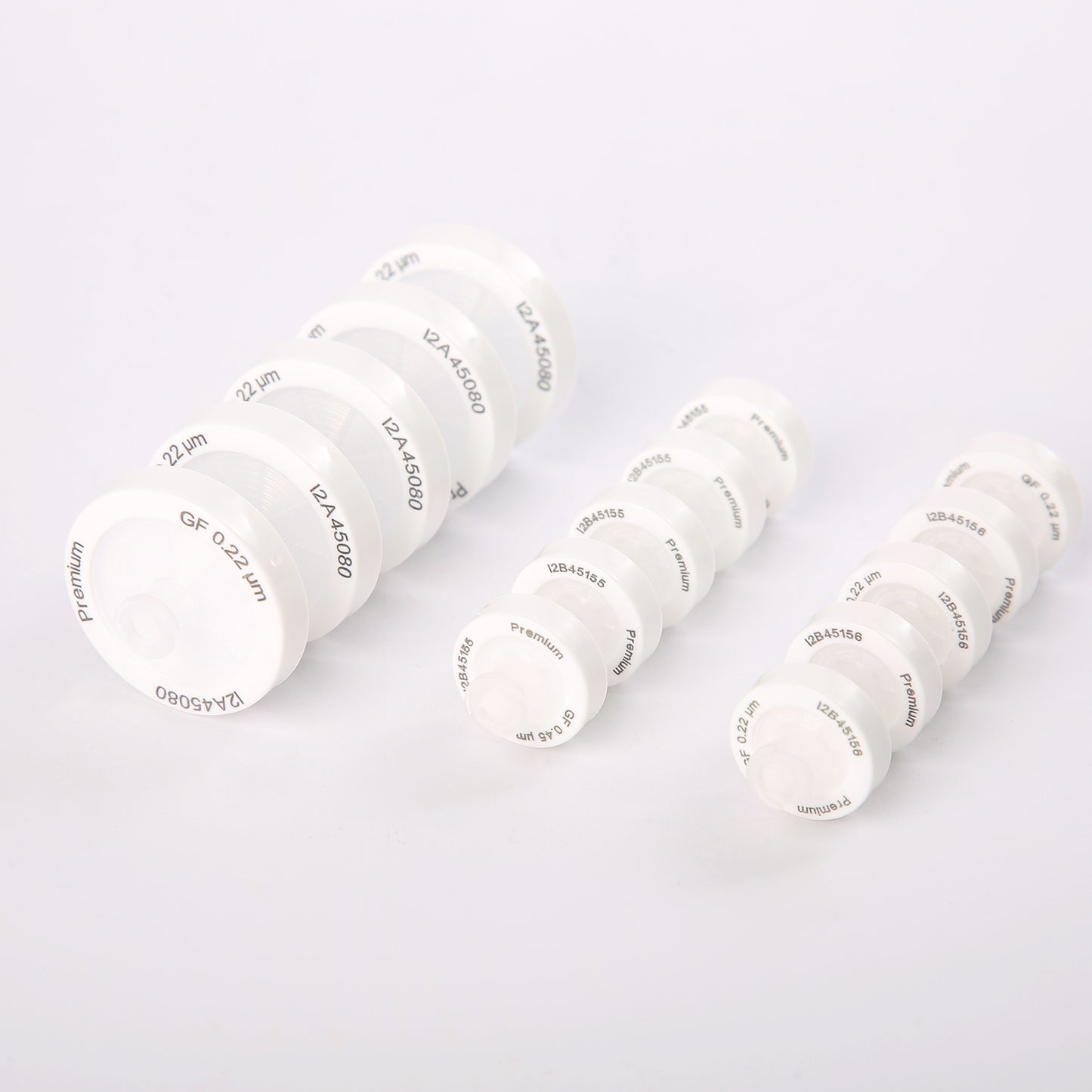
Cobetter glass fiber syringe filters are effective for the filtration of highly viscous samples. They have high compatibility with organic solvents, as well as strong acids and alkalis. The housing is made of premium polypropylene which has a wide chemical compatibility. The over-molded design ensures higher operating pressures. Luer lock inlet/outlet offers a leak-tight syringe connection.

Features

  • High dirt holding capacity
  • High throughputs
  • Excellent chemical compatibility

Applications

  • Clarification of environmental, industrial and wastewater samples
  • Filtration of viscous solutions
  • Prefiltration of viscous serums and tissue media samples before analysis
  • Prefiltration of cell media separations
  • Filtration of aggressive solvents and reagents

Quality Standards

  • ISO 9001:2015 Quality Management System
  • Manufactured for use in conformance with cGMP
  • COA/COQ provided with shipment
  • Endotoxin <0.25 EU/mL (LAL test, Aqueous extraction), USP<85>

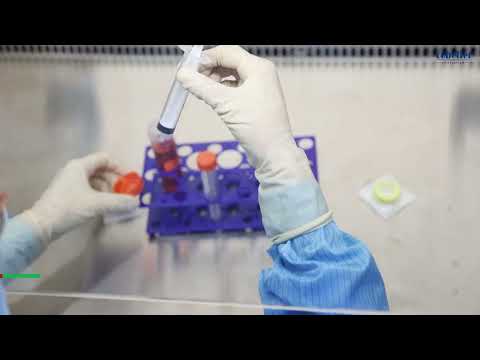
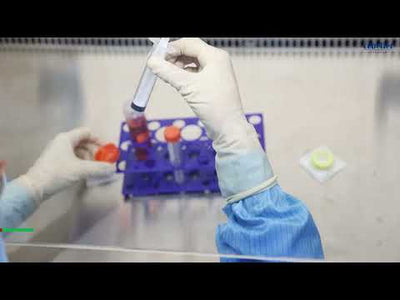
How to use a syringe filter?

Choose the right type of membrane material based on the properties of your sample. Be careful of the chemical compatibility to avoid extractables and leachables. Read this article about How to choose a syringe filter.

1. Load the sample into the syringe.

2. Attach the filter to the luer-lock of the syringe with a twisting motion. Make sure it is securely attached.

3. Filter the sample. Hold the syringe and filter vertically, and gently press the plunger to push the sample through the filter. Take care not to apply too much force or you may damage the filter.

4. Discard the used filter and repeat for the next sample.

Physical Properties Intended Use for Research Use Only
Filter Format Syringe Filter
Filter Color/Membrane Color White
Diameter 13mm - 0.72 cm²
25mm - 3.4 cm²
33mm - 4.5 cm²
Pore Size 0.22/ 0.45/ 1.0 μm
Pre-filter No
pH Range 2.0 – 11.0
Wettability Hydrophilic
Materials Membrane Material GF (Glass Fiber)
Housing Material Polypropylene (PP)
Operating Conditions Max. Operating Pressure 13mm: 6 bar
25mm: 3 bar
33mm: 2 bar
Max. Operating Temperature 50 °C
Connection Inlet / Outlet Female luer lock inlet and male luer slip outlet
Sterility Delivery Condition Non sterile
Sterilization Method Disposable
Package Pack Size Pack of 100
Packaging Bulk packed in plastic cans


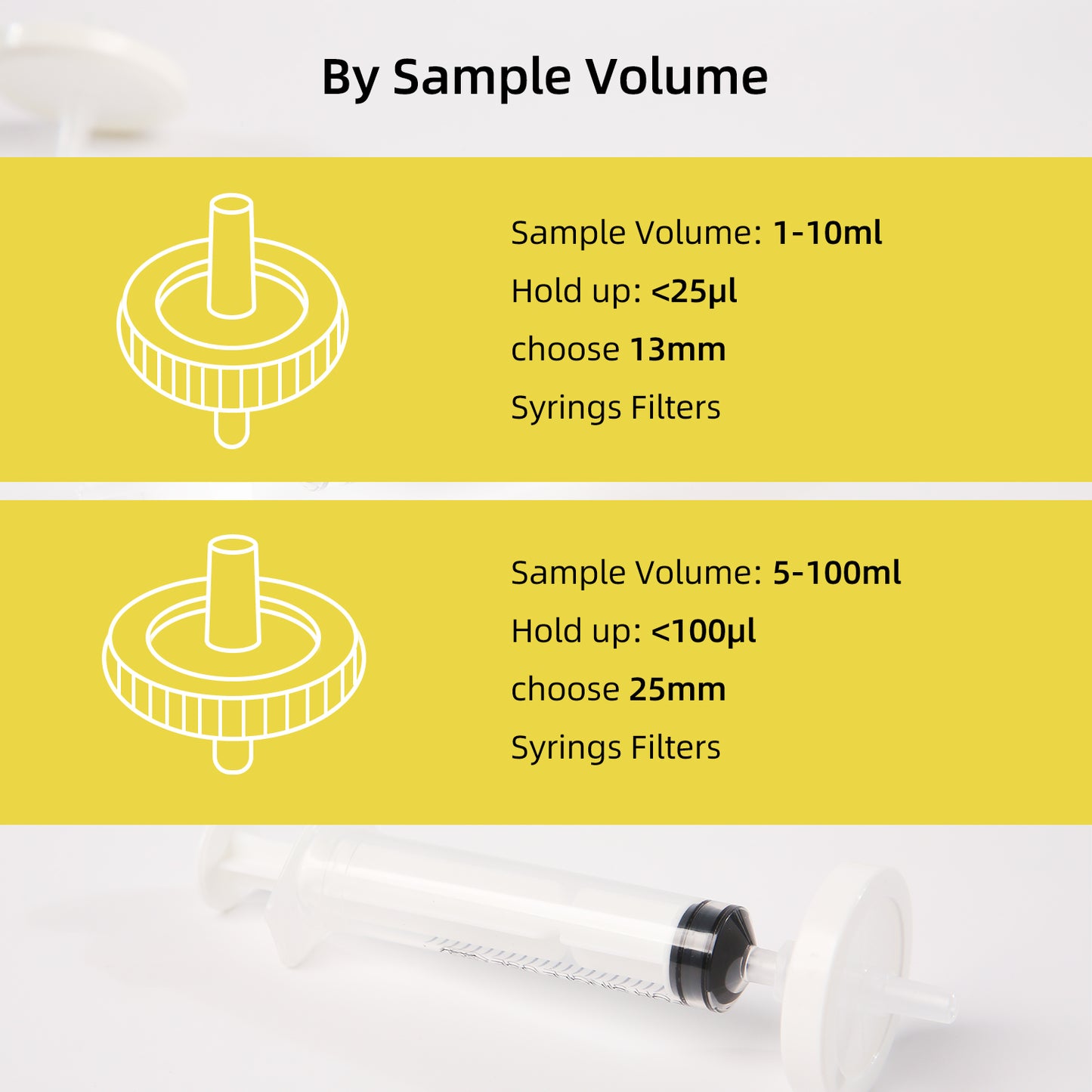
Select by Volume

Sample Volume Filter Diameter Filtration Area Hold-up Volume
< 10 mL 13 mm 0.72 cm² < 25 μl 
10 mL to 100 mL 25 mm 3.4 cm² <100 μl
100 mL to 200 mL 33 mm 4.5 cm² < 125 μl


  • Chemical_Compatibility_Chart_for_Syringe_Filters Download
What materials and specifications are available for Cobetter syringe filters?

Available materials: Nylon/PES/PTFE/PVDF/MCE/CA/PP
Pore sizes: 0.1/0.22/0.45/0.8/1.0/1.2/3.0/5.0/10.0μm
Diameter: 13mm, 25mm, 33mm
Nonsterile: 100/PK
Sterile: Individally packed, 100/PK

Are Cobetter sterile syringe filters pyrogen-free?

Cobetter sterile syringe filters are pyrogen-free.

Are Cobetter syringe filters Luer inlet/outlet? Are they fully compatible with syringes?

Cobetter syringe filters are equipped with Luer inlet/outlet, which are manufactured in accordance with GB/T 1962, ensuring reliable compatibility with standard syringes.

Which kind of syringe filter is recommended for precious protein samples?

For valuable protein samples, sterile PVDF syringe filters are recommended.
They provide high protein recovery rates (over 90% and even 99.9%) across a wide range of proteins.

What are the features and advantages of Cobetter syringe filters?

Fast flow rate.
No extractables.
Batch-to-batch consistency ensures reproducible experimental results.

Does Cobetter have suitable solutions for high-throughput filtration?

For high-throughput filtration, Cobetter recommends PES (Polyethersulfone) 96-well filter plates.

What is the shelf life of Cobetter syringe filters?

The non-sterile syringe filter has a shelf life of 3 years, while the sterile syringe filter has a shelf life of 2 years.