Q: Does Cobetter PVDF transfer membrane have a front and back side? Does it require activation before use?
Cobetter PVDF transfer membranes have a smooth and uniform surface and do not require distinguishing between the front and back sides during use.
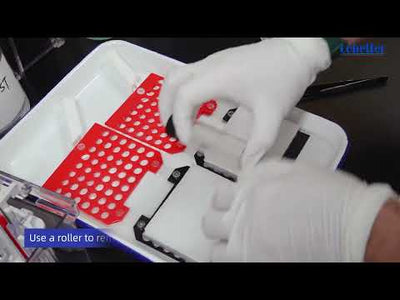
Before use, simply pre-wet the membrane with absolute ethanol or absolute methanol. After activation, the membrane changes from white and opaque to semi-transparent. A soaking time of 30–60 seconds is recommended.
Q: Are Cobetter PVDF transfer membranes available in pre-cut sizes?
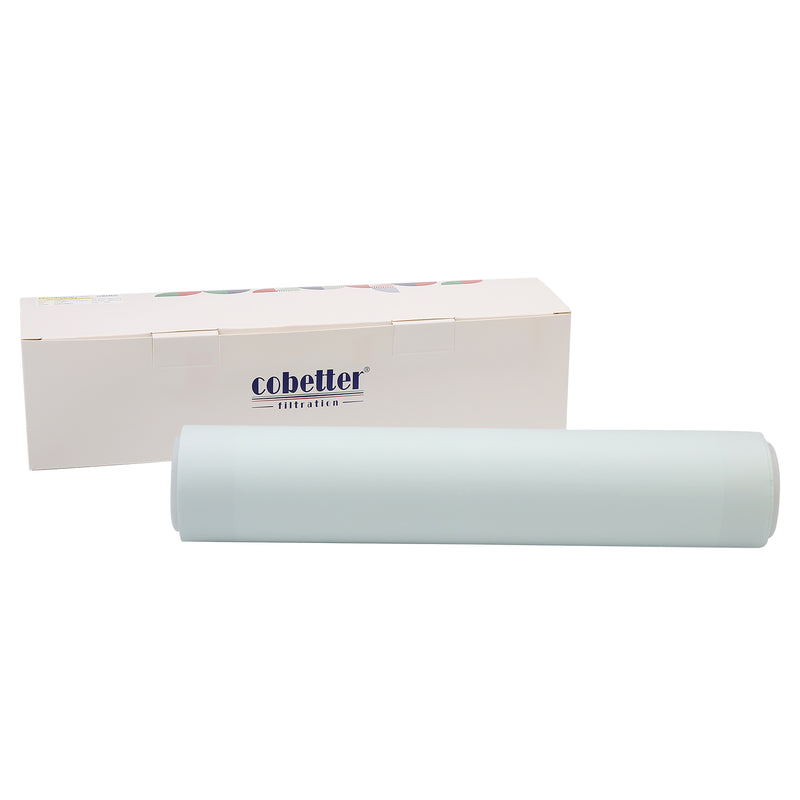
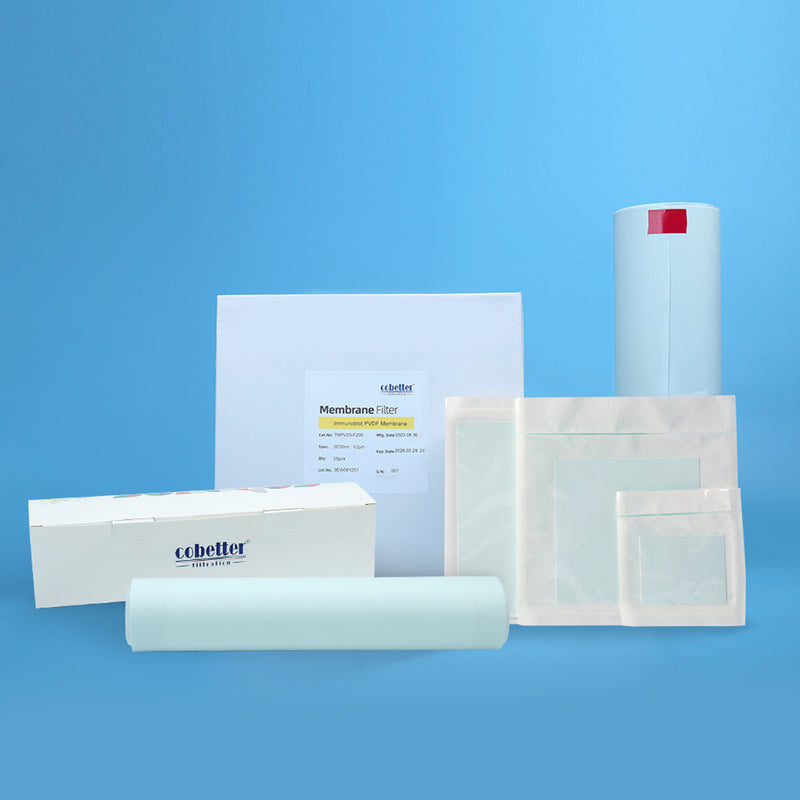
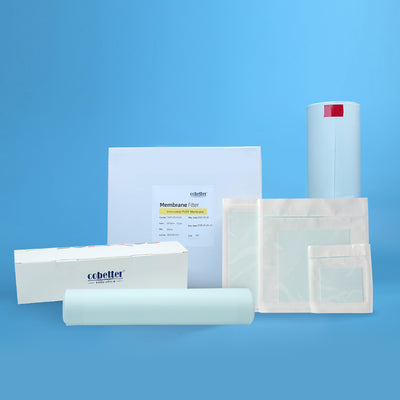
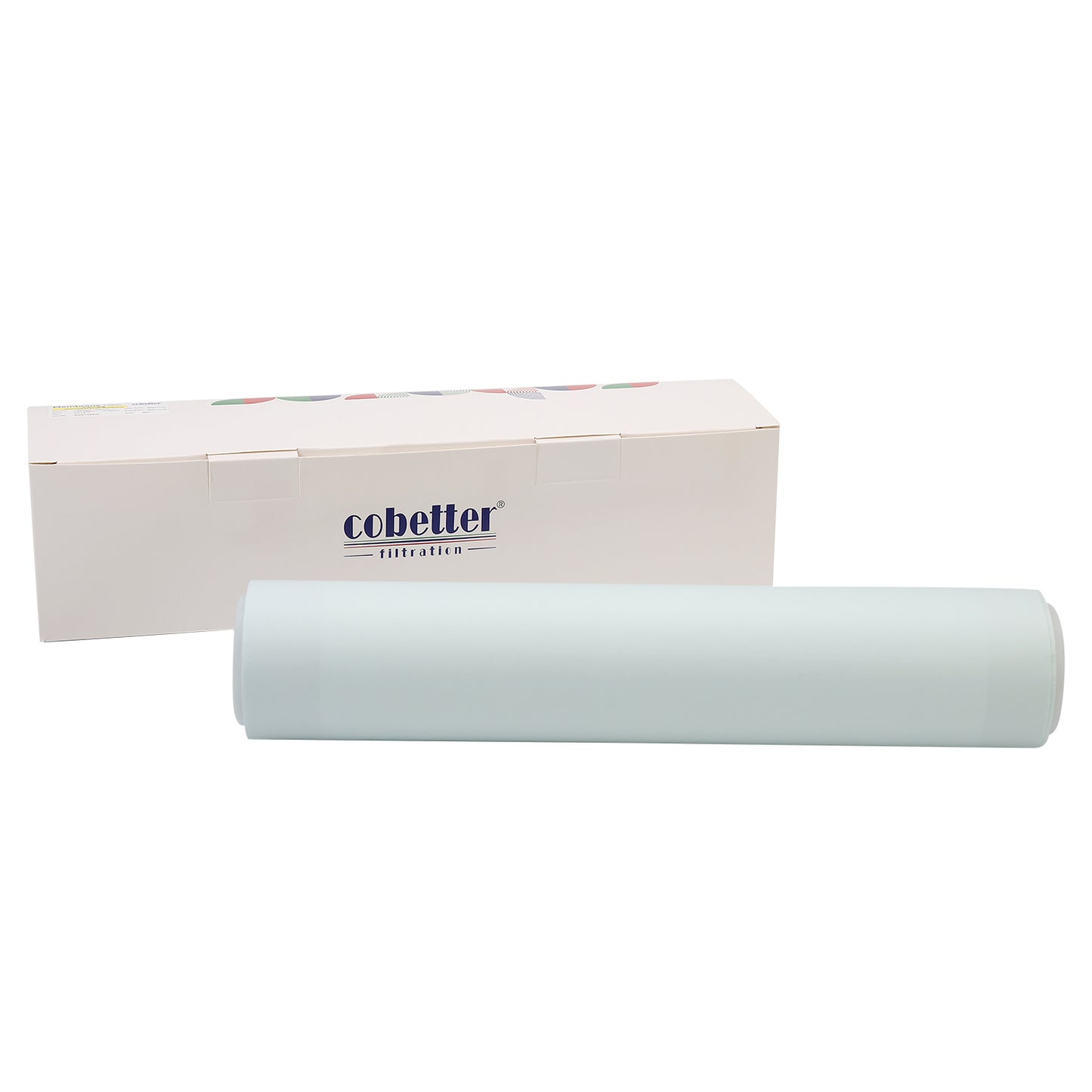
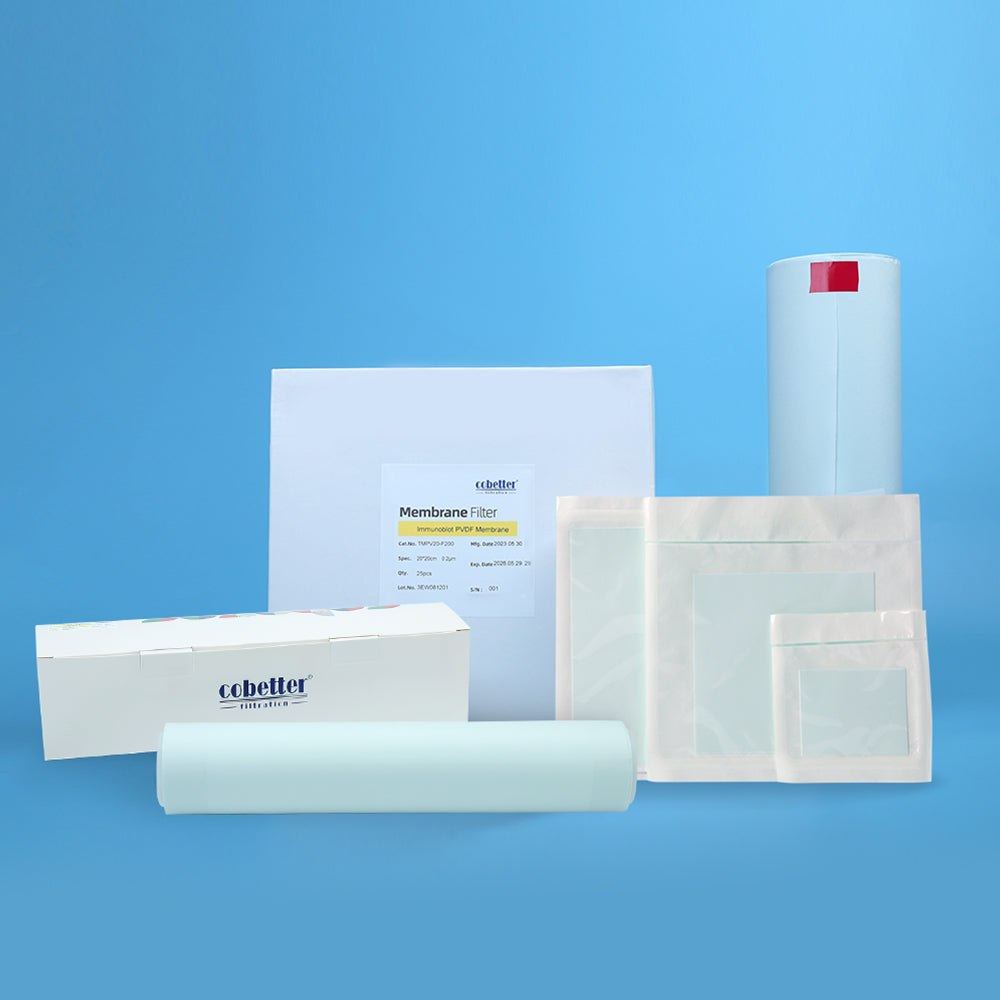
Cobetter transfer membranes are available both in roll format and as boxed, pre-cut sheets, to meet different experimental needs.
Roll format: 26.5 cm × 3.75 m
Pre-cut sheets: 200 mm × 200 mm; 84 mm × 70 mm
Q: How to choose the appropriate pore size of PVDF transfer membranes?
Select the appropriate transfer membrane based on the molecular weight of the protein:
Small proteins (<20 kDa): use a 0.2 µm PVDF transfer membrane
Large proteins (>20 kDa): use a 0.45 µm PVDF transfer membrane
Q: What should be considered when performing Western blotting for a high–molecular-weight protein (~200 kDa)?
Use a lower-percentage resolving gel, preferably around 7%.
Handle the gel carefully during stripping/removal to avoid damage.
Extend the transfer time to ensure efficient protein transfer.
Include a molecular weight marker, otherwise nonspecific bands may be difficult to interpret.
Q: How should transfer conditions be set for Western blotting?
For proteins in the 15–100 kDa range, a typical condition is 300 mA constant current for 45 minutes.
For proteins >100 kDa, lower current (around 220 mA) is generally recommended with a longer transfer time.
Based on experience: ZO-1 (250 kDa) can be successfully transferred in 2.5 hours. 150 kDa proteins can be transferred in 1.5 hours.
For example: If the largest target protein is 200 kDa, the transfer condition can be estimated as: 220 mA × (200 / 150) ≈ 134 minutes, plus an additional ~15–20 minutes, resulting in a total transfer time of approximately 150 minutes.
Q: How can the background on the PVDF western blot membrane be reduced?
1. Ensure proper blocking. PVDF membranes require more stringent blocking steps. This can be achieved by increasing the concentration of the blocking agent 2-5 fold, increasing the blocking time, nd performing the procedure at 37 degrees C.
2. Optimizing the dilution ratios of the primary and secondary antibodies can reduce nonspecific background.
3. Perform thorough washing, and keep the membrane continuously wet and free of contamination during all steps.
Q: What are the advantages of Cobetter PVDF transfer membranes?
1. Smooth and flat surface, resistant to curling.
2. High mechanical strength, allowing easy stripping and repeated use.
3. Uniform and consistent pore size, enabling high protein transfer efficiency and sharp, well-defined bands.
4. Higher sensitivity, improving the detection success rate of low-abundance proteins
Q: How should cellulose filter paper be selected for western blot?
The filter paper size should be slightly larger than the gel and the PVDF transfer membrane.
Cobetter pre-cut cellulose filter papers are designed to match the PVDF transfer membranes, offering convenient handling and an optimal fit.