Consieve 2 TFF Cassette RC Ultrafiltration Membrane Lab, 1/pk

In stock
Part No. UF2MC001SC01P
Regular price $295.00 USD
Filtration Area
MWCO
Screen Type
Loading locations...
*Ships within 15-30 Business Days
*Customers are responsible for any import duties or taxes
*Read our Shipping Policy and Refund Policy
*Not for medical use

Consieve™ 2 UFC RC membrane cassettes employ polyurethane resin encapsulation, significantly increases structural rigidity and compression resistance, ensuring dimensional stability of flow channels. The cassettes demonstrate excellent linear scalability from lab-scale development to production-scale manufacturing. With optimized flow path configurations and multiple channel options, users can select the most suitable flow structure based on application requirements to improve process economics.

The regenerated cellulose (RC) ultrafiltration membrane demonstrates strong hydrophilicity, low absorption, low extractables, and excellent organic solvent resistance, offering advantages such as high flux, strong antifouling capability, and ease of cleaning/regeneration.

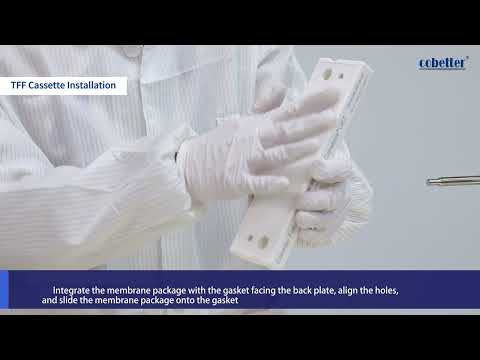
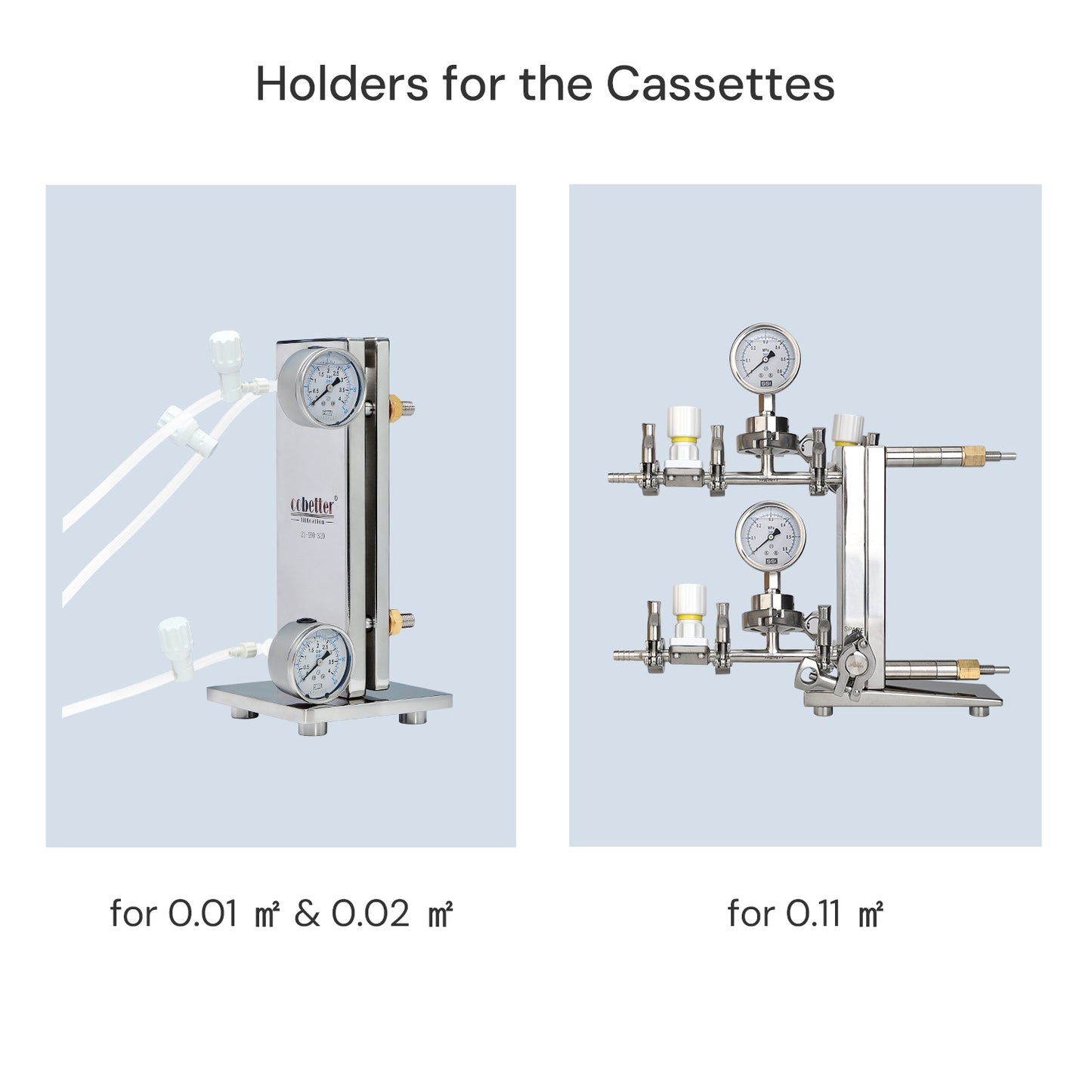
The cassettes should be used with Cobetter Stainless Steel TFF Cassette Holder:

EFA 0.01m² or 0.02m² cassettes use with Ultrafiltration Cassette Holders (0.01m²)

EFA 0.02m² or 0.11m² cassettes use with Ultrafiltration Cassette Holders (0.11m²)

EFA 0.5m²or 2.5m²cassettes use with Ultrafiltration Cassette Holders (0.5m²)

Features

  • Extra-low protein binding
  • Wide chemical compatibility
  • Compatible with organic solutions
  • High product yield
  • No glue used, resulting in low extractables
  • pH range: 2-13

Applications

  • Concentration and desalting of proteins, peptides or nucleic acids
  • Buffer exchange
  • Fractionation and purification
  • Sample preparation before chromatography
  • Remove pyrogens from water, buffers, media solutions
Materials Membrane material Regenerated Cellulose (RC)
Screen PP
Gasket Silicone
Adhesive Polyurethane
Operating Conditions Max. Operating Temperature 50°C
Max. Operating Pressure 4.0 bar
pH range 2.0-13.0
Sterility Delivery Condition
Nonsterile
Package Packaging Individually packed in PE bag
Pack Size 1 pc/pk


Screen Difference

Screen Type Features Applications Recommended Feed Flow Rate (L/min/m²)
Tight Screen (A) High shear rate, high mass transfer efficiency, high pressure drop Low-concentration, low-viscosity clarified solutions; Recommended protein concentration <100 g/L 4-6
Standard Coarse Screen (C) Medium shear rate, medium mass transfer efficiency, medium pressure drop Higher-concentration, higher-viscosity clarified solutions; Recommended protein concentration 100–200 g/L 5-7
Coarse Screen (D) Low shear rate, low mass transfer efficiency, low pressure drop High-concentration, high-viscosity, low-turbidity solutions; Recommended protein concentration 200–300 g/L 5-8
Suspended Screen (V) Very low shear rate, very low mass transfer efficiency, very low pressure drop Turbid solutions with relatively high solid content 7-10


  • Cobetter_Consieve_2_TFF_Cassettes_and_Systems_260126 Download

Q: What is tangential flow filtration (TFF)?

Tangential flow filtration (TFF) is a method in which the feed flows along the membrane surface, generating tangential shear to reduce membrane fouling and clogging. TFF is commonly applied as ultrafiltration (1–1000 kDa) or microfiltration (0.1–0.65 µm).

Q: How to choose the appropriate ultrafiltration membranes?

For most ultrafiltration and dialysis applications, both PES and RC membranes are suitable choices.

PES membranes can meet a wide range of application needs for most protein and small-molecule products, such as antibodies, APIs, and vaccines.

RC membranes should be considered when preparing high-concentration formulations, applications containing organic solvents (e.g., ADC products), or concentration/exchange of linear molecules including oligonucleotides and peptides.

For new target molecules, it is recommended to test both membrane types during standard sample handling and process optimization.

Q: How to select the appropriate cut-off for ultrafiltration cassettes?

Choose the membrane cut-off based on the size or molecular weight of the substance to be separated or retained:

Antibody proteins: 30 kDa or 50 kDa
Viral or vaccine products: 100–1000 kDa

For API products, an appropriate molecular weight cut-off (MWCO) can be selected from the range of 1 kDa, 2 kDa, 3 kDa, 5 kDa, 8 kDa, and 10 kDa according to the process objectives.

If the molecular weight of the target substance is unknown, preliminary testing can be performed using ultrafiltration centrifugal devices with different cut-offs to identify the most suitable molecular weight retention.

Q: What materials and cut-offs are available for Cobetter cassettes?

Ultrafiltration cassettes are available in PES and RC membranes, with cut-offs ranging from 1–1000 kDa.
Microfiltration cassettes are available in PES and PVDF membranes, with pore sizes ranging from 0.1–0.65 µm.

Q: Can ultrafiltration cassettes be reused?

Yes. Ultrafiltration cassettes can be reused by selecting appropriate cleaning methods. However, due to changes such as declining membrane flux and increased permeation, the cassettes should be replaced periodically as needed.

Q: How should ultrafiltration cassettes be cleaned?

They can be cleaned by circulating 0.1-0.5 M sodium hydroxide (NaOH) solution. If cleaning effectiveness is insufficient, adjustments can be made by either of the following methods:

Increasing the cleaning solution temperature (<45 °C)
Adding sodium hypochlorite (NaClO, 500 ppm)
Extending the cleaning time

For difficult-to-clean feed components, alternative cleaning solutions such as acidic solutions, alcohols, or surfactants may also be used.

Q: Are Cobetter ultrafiltration membrane cassettes compatible with hardware from other companies?

Yes. They can be installed in holders from Merck, Pall, and similar manufacturers. But it is necessary to ensure proper torque and perform integrity testing.

For Sartorius holders, a specific adapter plate is required for proper installation.

Product FAQ